
A CONNECTED OPERATING CONCEPT
The systems behind
the vision.
Computing is the purpose. Power, heat rejection, communications and maintainability determine whether that purpose can work.
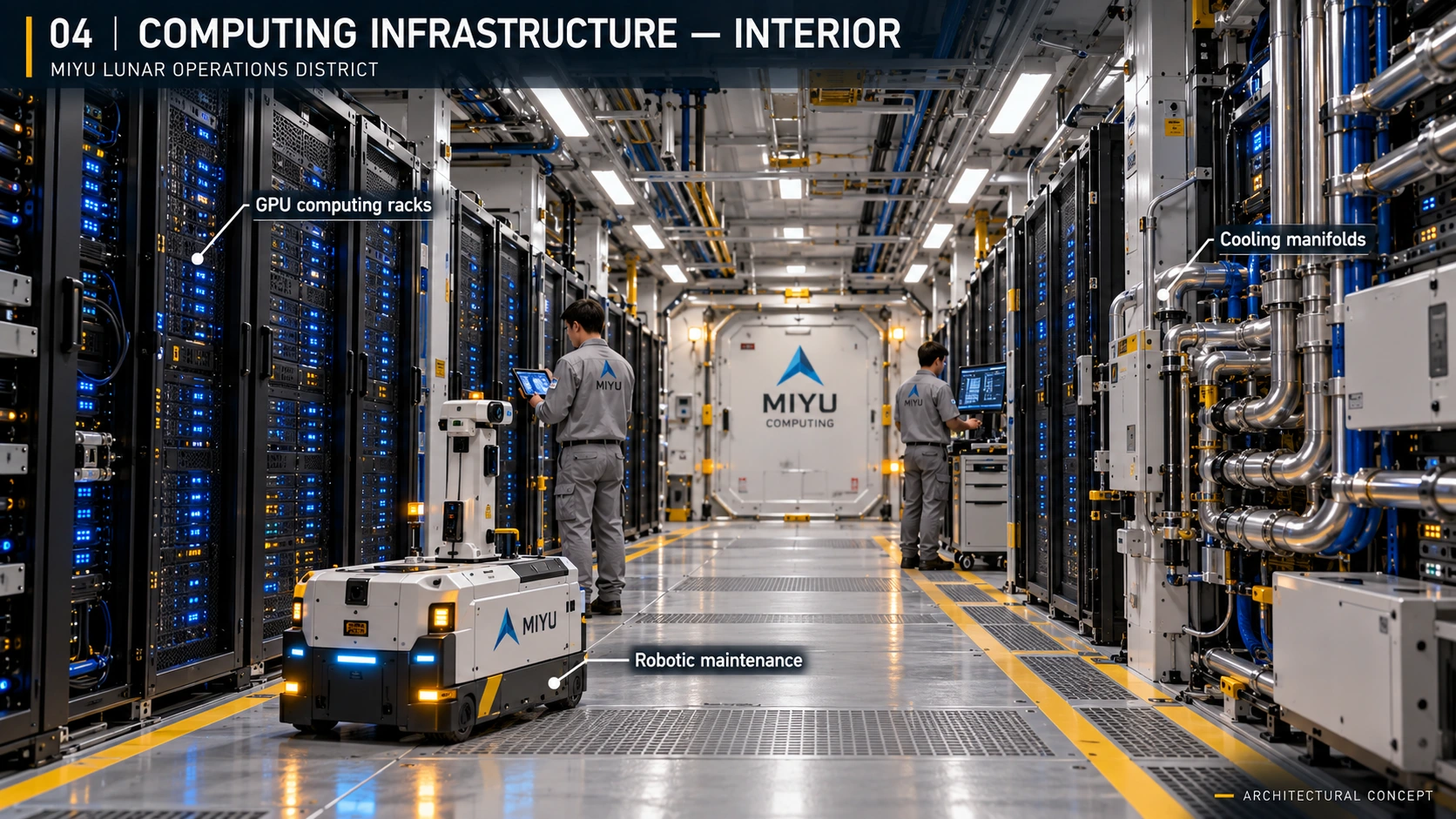
01 / COMPUTING & STORAGE
Useful work, close to lunar activity.
Proposed workloads include local AI inference, scientific data handling, engineering simulation and storage. Regional robotic operations could use the hub for planning and coordination, while safety-critical equipment would still need suitable local autonomy and resilience.
Design question
Computing capacity, hardware selection, network latency and service demand have not yet been specified.
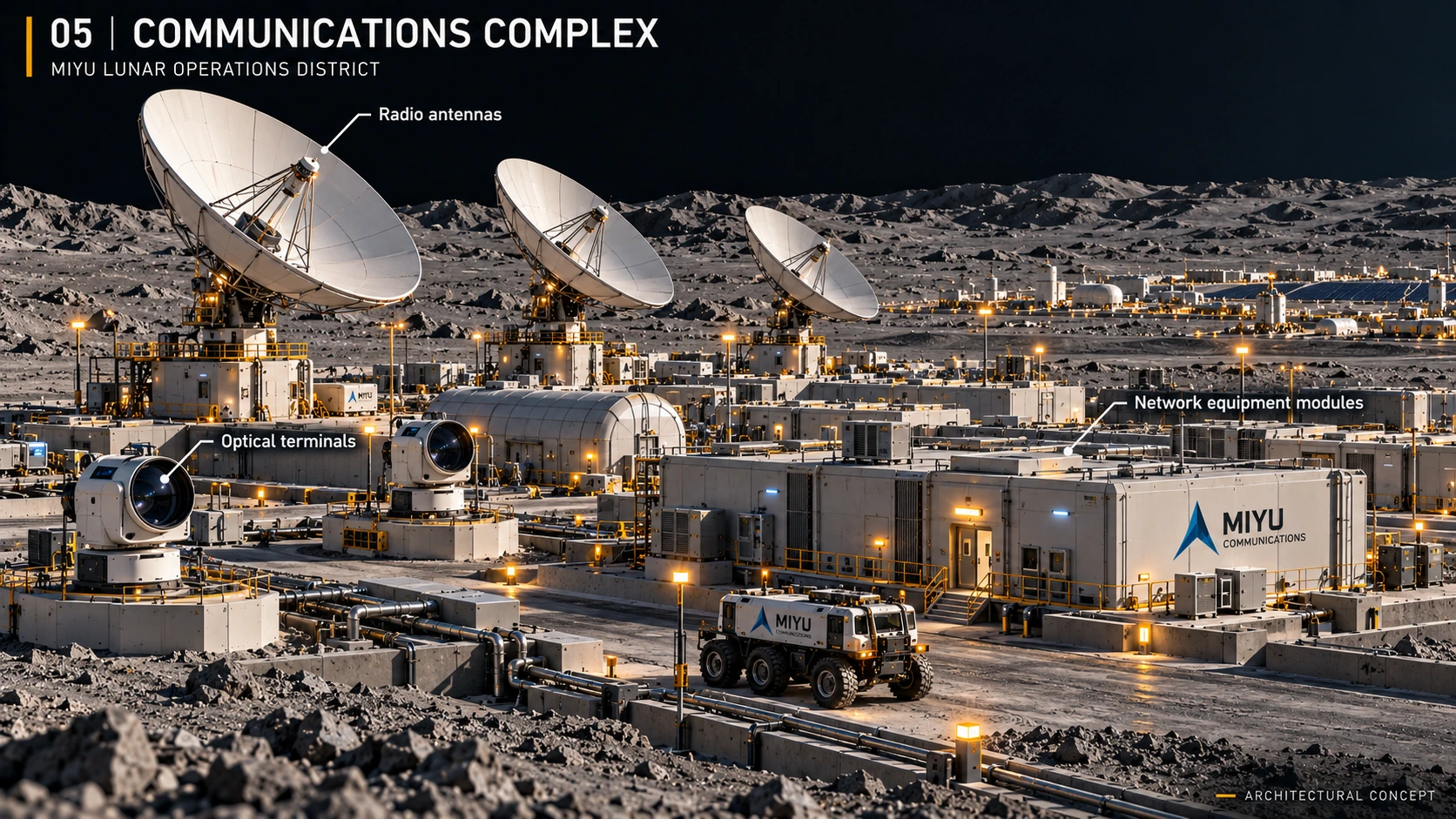
02 / COMMUNICATIONS
Surface, orbital and Earth links.
Radio and optical terminal concepts connect the campus to a possible regional surface network, lunar orbiters and Earth. The northwest communications district also provides space for tracking and network operations.
Design question
Link budgets, line of sight, orbital coverage and redundancy require detailed analysis.
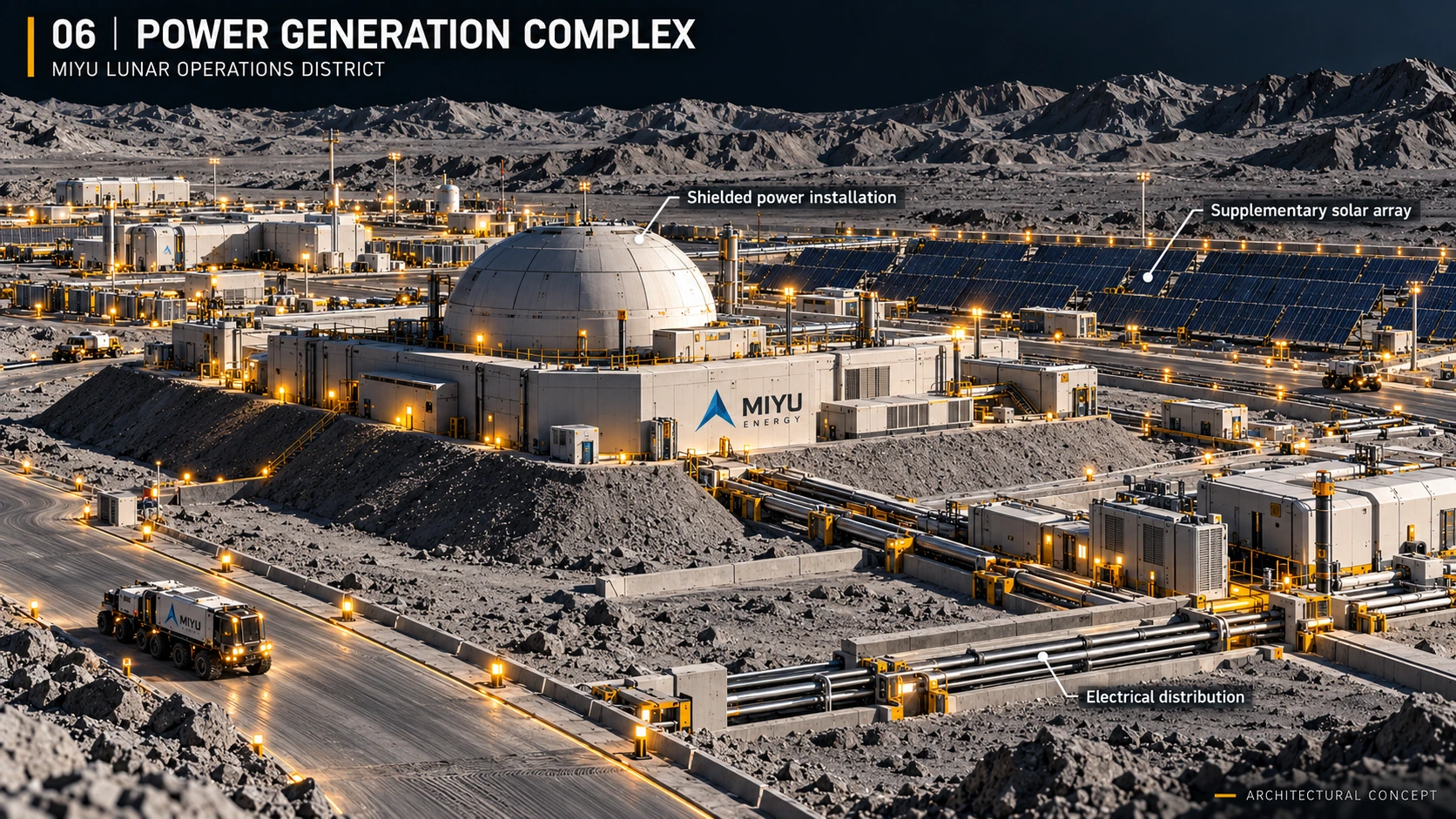
03 / ENERGY
Plan for continuous operation.
The current concept uses fission as the primary source, with supplementary solar generation, energy storage and protected electrical distribution. Staged development would need to match available power to computing and support loads.
Design question
The drawings do not establish reactor output, shielding, exclusion distances, storage capacity or a deployment schedule.
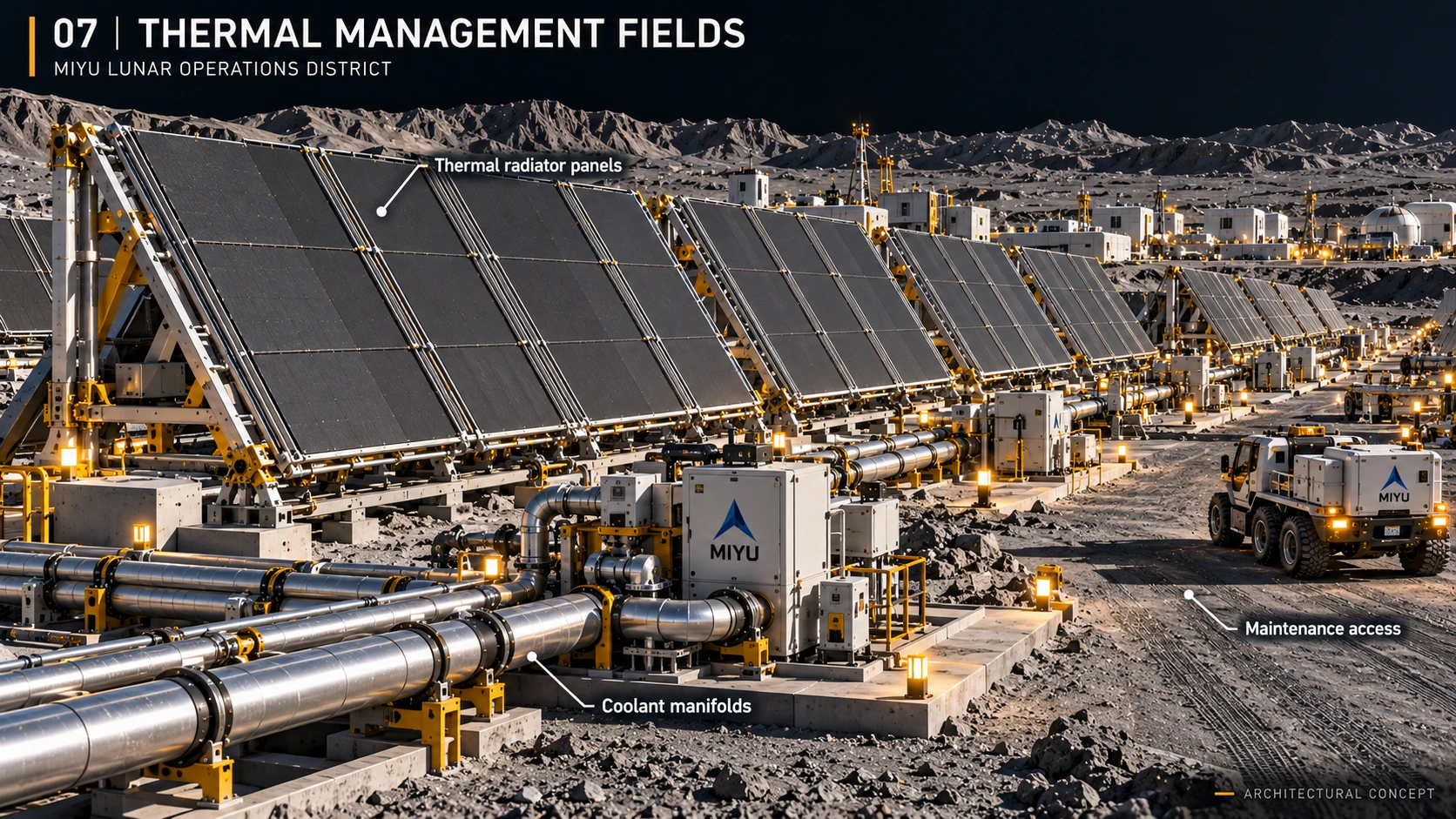
04 / THERMAL MANAGEMENT
Heat rejection is a site-scale system.
Closed-loop cooling would carry waste heat from computing and power systems to dedicated radiator fields. The masterplan includes northern thermal-management areas and provision for expansion.
Design question
Radiator area, operating temperatures, solar exposure, surface interaction and failure resilience remain to be calculated.
05 / MAINTENANCE & LOGISTICS
Service the hardware. Sustain the district.
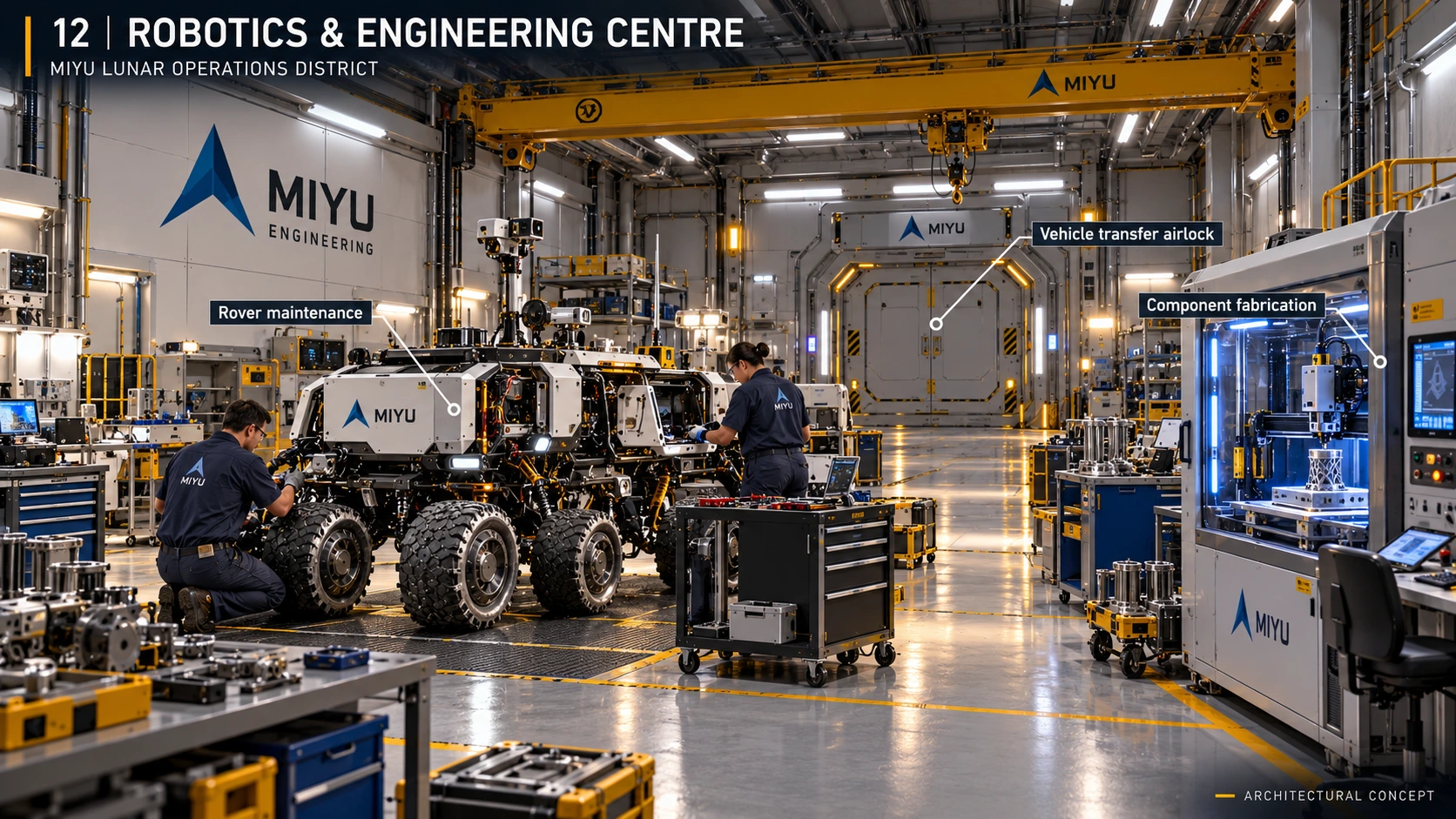
Robotics workshops, spare components, cargo facilities and the perimeter road support installation, maintenance and replacement. Proposed regolith processing and fabrication may help future construction; oxygen and metals recovery remain development possibilities.
Design question
Local manufacturing is not assumed to make the facility self-sufficient. Supply chains, dust control and landing ejecta protection need further work.
06 / RESIDENT SUPPORT
A small community with a practical role.
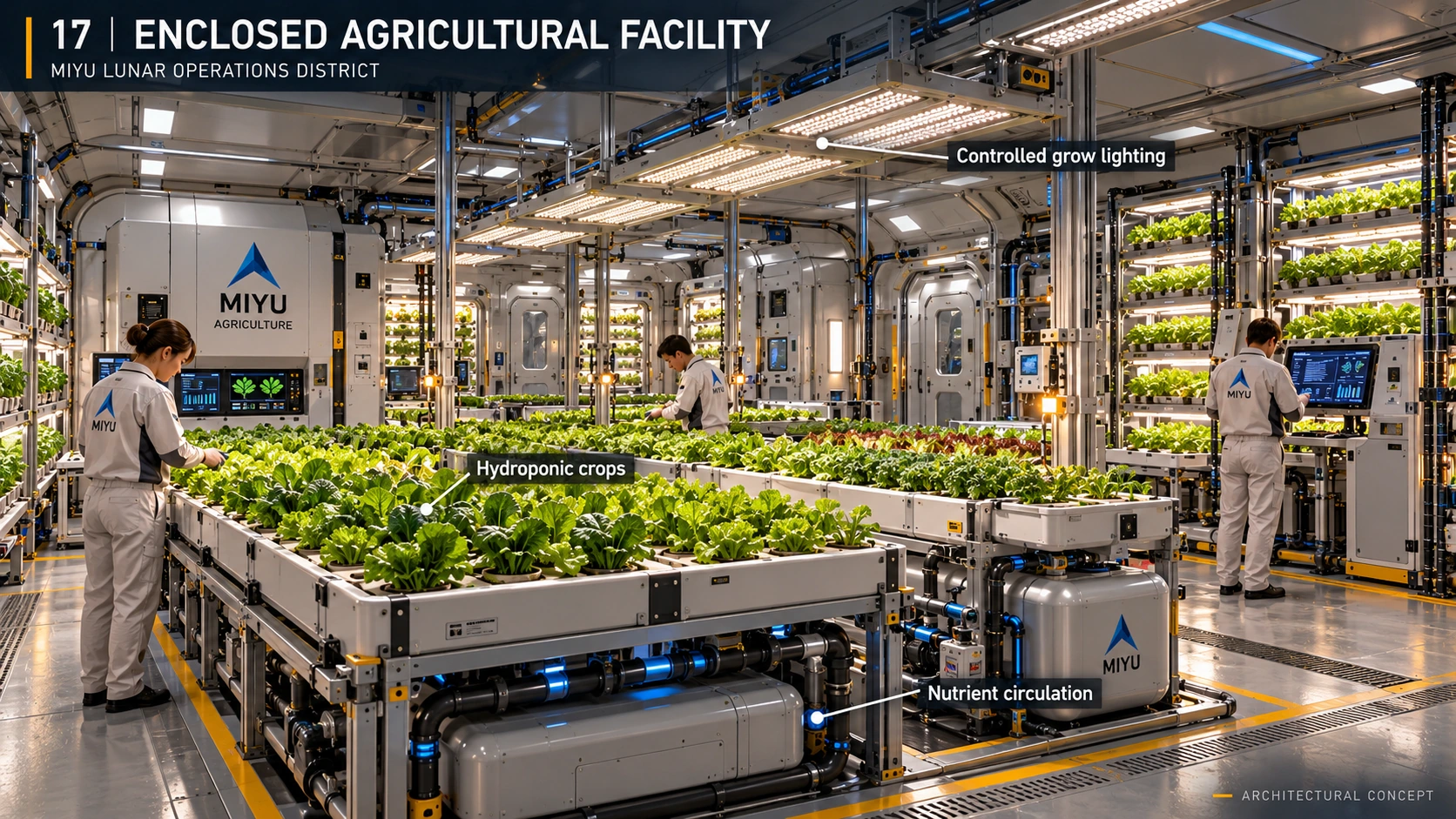
Habitation, medical care, research and sealed food production support the people who would develop and service the campus. The Phase 3 accommodation target is 120 people.
Design question
Food output, staffing, floor areas, shielding, life support and emergency provisions have not been sized.
A LATER RESEARCH DIRECTION
Surface hub.
Orbital possibilities.
Links to hypothetical GPU clusters in lunar orbit remain an optional extension. Their value would depend on power, cooling, communications, servicing and demand—not simply on placing computing hardware in space.
The surface campus is the current concept. Orbital computing and neighbouring developments are future possibilities, not existing installations or prerequisites.
STAGED DEVELOPMENT
Build capability in steps.
- Establish the site
Survey, communications, dependable power, thermal trials and robotic logistics.
- Prove a computing module
Test a serviceable pilot installation against actual workloads and operating constraints.
- Expand with demand
Add computing and support facilities as evidence, infrastructure and demand justify them.
An illustrative sequence, not a funded construction programme or a dated commitment.